
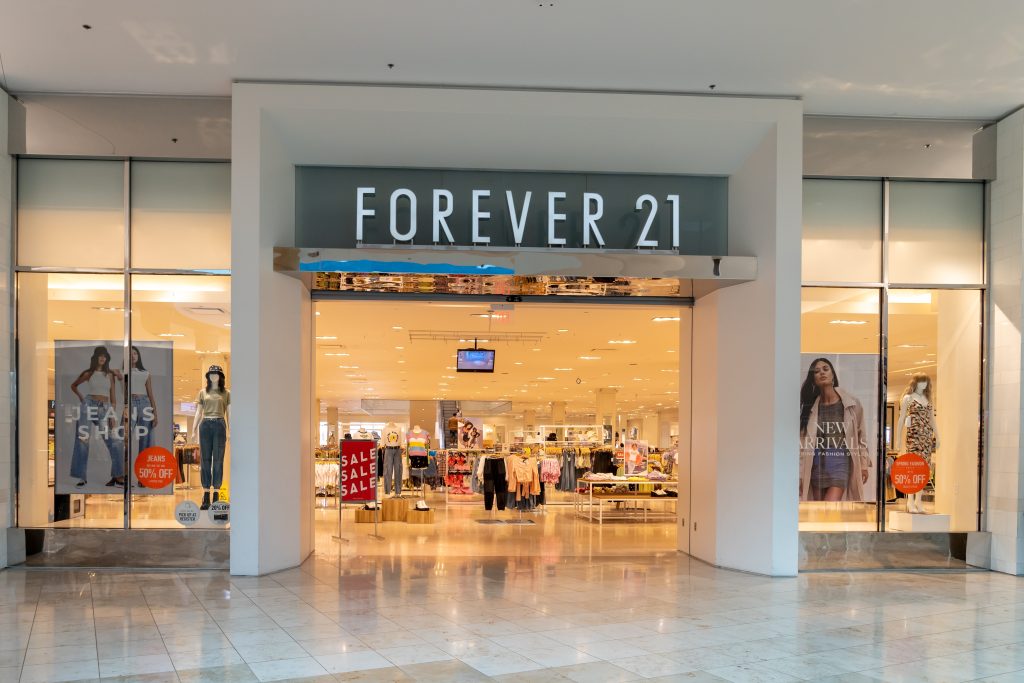
It has been a challenging start to 2025 for retailers in the fashion industry as they downsize and change their operations amid economic uncertainty, tariffs, and increased pressure from online fast fashion retailers. Retail Gazette takes a look at the apparel retailers that faced financial difficulties in 2025.
Forever 21
Fast fashion brand Forever 21 recently filed for Chapter 11 bankruptcy and blamed the rise in competition from low-cost online retailers such as Shein and Temu for its closure.
Brad Sell, CFO of Forever 21, said: “While we have evaluated all options to best position the company for the future, we have been unable to find a sustainable path forward, given competition from foreign fast fashion companies, which have been able to take advantage of the de minimis exemption to undercut our brand on pricing and margin.”
Forever 21 has faced financial struggles over the years, previously filing for bankruptcy in 2019 before a $81 million acquisition by Simon Property Group, Brookfield Properties, and Authentic Brands Group.
However, it has struggled to stay afloat, losing $400 million in the last three years and downsizing its brick-and-mortar fleet.
Founded in 1984, fast fashion brand Forever 21 grew to 500 stores in the US and expanded its retail presence globally; however, the increasing pressure on brick-and-mortar retailers led to its closure.
Nike

Sportswear retailer Nike has faced declining sales in its most recent quarter, with revenue dropping by 9% to $11.3 billion, and the direct-to-consumer business fell by 12%.
Additionally, wholesale went down by 7%, and digital sales also fell by 15% in the quarter.
The sportswear giant is facing increased competition and is struggling to stay afloat amid changing consumer trends.
As part of its plans moving forward, Nike plans to streamline its outdated inventory and leverage lucrative collaborations and partnerships to boost its sales.
It forecasted a low outlook for the upcoming fiscal year and also launched a collaboration with Skims as part of its turnaround strategy.
Elliott Hill, Nike’s president and CEO, said in an earnings call: “While we met the expectations we set, we’re not satisfied with our overall results. We can and will be better.”
Foot Locker US

Foot Locker reported declining sales in 2024; total revenue dropped to $7.9 billion compared to $8.1 billion year-on-year.
Additionally, total sales in Q4 2024 fell by 5.8% to $2.2 billion, and the company blamed increased cautious spending for its mixed results.
Mary Dillon, Foot Locker’s CEO, said: “That said, as we move through February, we see consumers being more cautious and sensitive, which has impacted our business quarter-to-date.”
“They spend when there’s a call to action, but they are more cautious in those in-between periods.”
Moving forward, the company planned an operational shake-up, including shuttering 400 stores and revamping the design of 300 stores.
Liberated Brands
Liberated Brands, the parent company of Quiksilver, Billabong, and Volcom, filed for bankruptcy in 2025 and will close all of its approximately 144 retail stores.
The decision was driven by steep competition with low-cost fast fashion, changing consumer trends, and a failed deal with Authentic Brands Group for the Boardriders banners, including Billabong, Roxy, and Quiksilver.
David Brooks, executive vice president of action and outdoor sports and lifestyle at Authentic, commented: “Liberated’s US store fleet was overinflated, burdened with outdated and underperforming locations.”
Neiman Marcus
Neiman Marcus has faced financial struggles in the past and filed for bankruptcy in 2020 before being acquired by Saks Global for $2.7 billion.
The parent company of the luxury retailer downsized in July 2024 and continues to streamline its operations as part of its business strategy.
Additionally, dropping luxury shoppers’ sentiment is affecting the retailer, with a survey by Saks Global Luxury Pulse revealing that only 43% of customers expressed optimism about the economy, a 5% drop from the previous year.
A spokesperson for the company told Retail Dive: “We are continuing the integration process following our recent acquisition of Neiman Marcus Group by consolidating functional leadership, clarifying key decision makers, and beginning to simplify our organizational structure.”
Under Armour
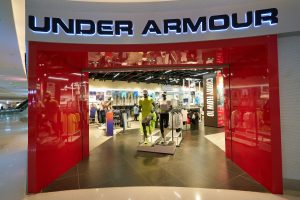
Sportswear apparel retailer Under Armour has been facing financial challenges, having previously laid off an undisclosed number of staff and cut off 25% of its SKU count in 2024.
In its most recent financial quarter, Q3 2025, North American revenue dropped by 8% to $844 million, and there was a steep decline of net income to $1.23 million compared to $110.75 million in the year prior.
However, the company’s gross margin went up by 240 basis points to 47.5% due to fewer discounts, lower production costs, and favorable foreign currency exchange.
Despite the slight improvement, the company forecasted a negative outlook, expecting to see its revenue drop by an estimated 10% in the upcoming fiscal year.
Click here to sign up to Retail Gazette‘s free daily email newsletter