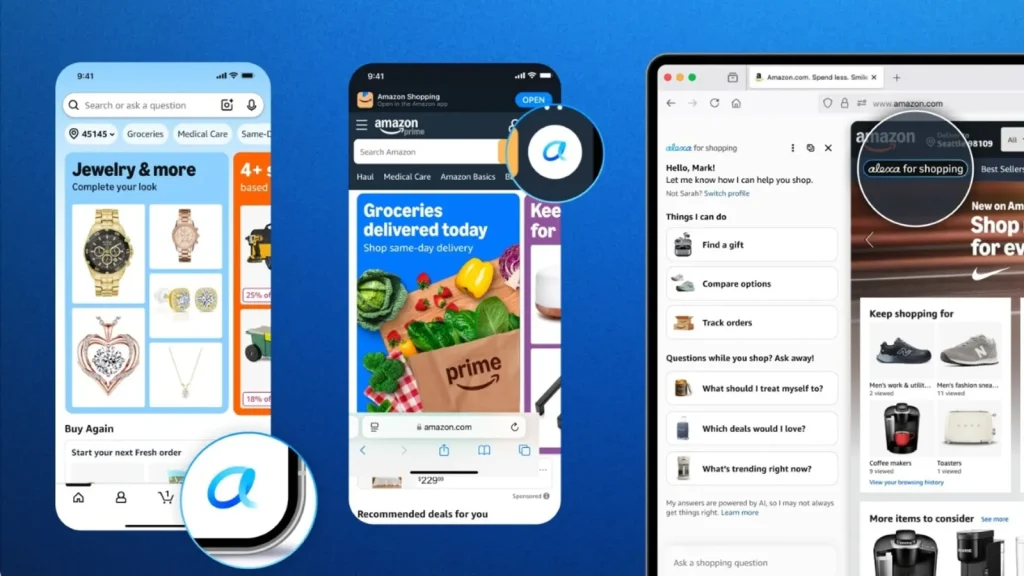
Amazon is rolling out a new AI shopping assistant called Alexa for Shopping across the U.S., integrating conversational AI directly into the Amazon Shopping app’s main search bar.
The feature, which will become available to all U.S. customers over the coming week, replaces Amazon’s Rufus AI shopping assistant and expands its capabilities.
Users who type questions into Amazon’s search bar will automatically receive AI-generated answers, while traditional keyword-based product searches will continue to return standard results pages.
Alexa for Shopping can handle many of the same functions previously offered by Rufus, including comparing products, reviewing item details and accessing previous orders.
The assistant can also browse products from third-party retailers and complete purchases through Amazon’s Buy for Me feature.
Amazon said more than 300 million customers used Rufus during 2025, but analysts believe Alexa’s far greater brand recognition could significantly expand adoption of AI-assisted shopping.
According to Brad Jashinsky, Alexa’s established consumer familiarity gives Amazon an advantage as retailers race to integrate AI into online shopping experiences.
“In addition to Alexa for Shopping’s enhanced functionality, Alexa has much higher brand awareness than Rufus,” Jashinsky said. “The combination of putting Alexa for shopping front and center along with Alexa’s greater brand awareness will lead to more usage.”
Related Story

The rollout strengthens Amazon’s position in product discovery, an area where the company already dominates. Gartner research found that 54% of consumers used Amazon to research products in 2025, surpassing traditional search engines including Google at 51%.
The new assistant also benefits from Amazon’s broader ecosystem of Alexa-enabled devices. Customer interactions across those devices will help improve personalization and recommendations over time, according to the company.
Neil Saunders said Amazon’s deep consumer data gives it a significant edge over competitors building similar AI tools.
“It’s not just the fact that it’s an AI tool that benefits, it’s the fact that Alexa and Amazon know a great deal about individual consumers so can use that information to enhance the experience in a personal way,” Saunders said.
Retailers across the sector are increasingly investing in AI-powered shopping assistants and conversational commerce tools, though analysts expect traditional search and browsing experiences to remain important alongside emerging AI interfaces.
Click here to sign up to Retail Gazette‘s free daily email newsletter